The Evolution of Computers: A Journey from Early Mechanical Devices to Modern Quantum Computing
From clunky mechanical contraptions to machines capable of harnessing the power of quantum mechanics, computers have come a long way. Their evolution is not just a tale of technological advancement but also a testament to human ingenuity and the insatiable desire to solve complex problems. Let’s explore the key milestones in the evolution of computers.
The Mechanical Beginnings
The story of computers begins with mechanical devices designed to perform basic calculations. One of the earliest examples is the abacus, developed thousands of years ago. While primitive by today’s standards, it laid the foundation for computational thinking.
In the 17th century, inventors like Blaise Pascal and Gottfried Wilhelm Leibniz introduced mechanical calculators. Pascal’s Pascaline could perform addition and subtraction, while Leibniz’s Stepped Reckoner extended capabilities to multiplication and division. Though groundbreaking, these devices relied entirely on manual operation.
The First Computing Machines
The 19th century saw the emergence of more advanced mechanical systems. Charles Babbage, often referred to as the “father of the computer,” designed the Analytical Engine in 1837. Though never built during his lifetime, it was conceptualized as a programmable, general-purpose computing machine. Alongside him, Ada Lovelace wrote algorithms for the machine, earning her recognition as the first computer programmer.
Another leap came in the 20th century with the development of punch card systems by Herman Hollerith, used to tabulate data for the U.S. Census in 1890. This invention marked the start of automated data processing.
The Era of Electronic Computers
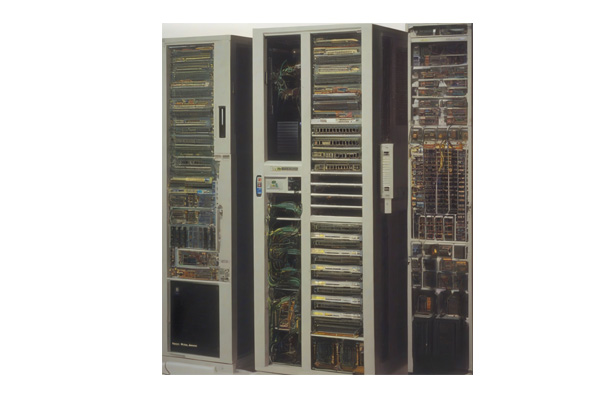
The transition from mechanical to electronic computers began in the mid-20th century. The first electronic computers, such as the ENIAC (Electronic Numerical Integrator and Computer) built in 1945, used vacuum tubes to perform calculations. These machines were enormous, consuming entire rooms, yet they revolutionized computing power.
The invention of the transistor in 1947 was a game-changer, enabling the development of smaller, more efficient machines. By the 1960s, transistors had replaced vacuum tubes, giving rise to the second generation of computers.
The Microchip Revolution
The next significant breakthrough came with the development of integrated circuits (ICs) in the 1950s and 1960s. These microchips allowed multiple transistors to be placed on a single silicon chip, drastically reducing the size and cost of computers.
In 1971, Intel introduced the first microprocessor, the Intel 4004, which paved the way for personal computers (PCs). By the 1980s, companies like Apple and IBM had brought computers into homes and offices, revolutionizing daily life and work.
The Internet Age and Beyond
The advent of the Internet in the late 20th century transformed computers into interconnected tools for communication, collaboration, and access to a global repository of knowledge. At the same time, advances in software and user interfaces made computers more accessible to non-technical users.
The Dawn of Quantum Computing
Today, the cutting edge of computing lies in quantum mechanics. Unlike classical computers, which use bits (0s and 1s), quantum computers use qubits, capable of representing multiple states simultaneously. This allows them to solve problems that would take classical computers years or even centuries to compute.
Companies like IBM, Google, and startups worldwide are racing to develop practical quantum computers. While still in their infancy, these machines hold the promise of revolutionizing fields like cryptography, material science, and artificial intelligence.
Conclusion
The evolution of computers is far from over. What began as rudimentary mechanical devices has transformed into a journey through electronics, microchips, and now quantum physics. As we look to the future, one thing remains clear: the story of computers will continue to be one of boundless innovation and endless possibilities.