Quantum Computing and the New Monetary Distribution System is an in-depth educational video series that uncovers how quantum technology is set to transform the future of global finance. Through clear explanations, engaging visuals, and expert-led lessons, this course breaks down the complexities of traditional monetary systems and the growing challenges they face in speed, security, and scalability.
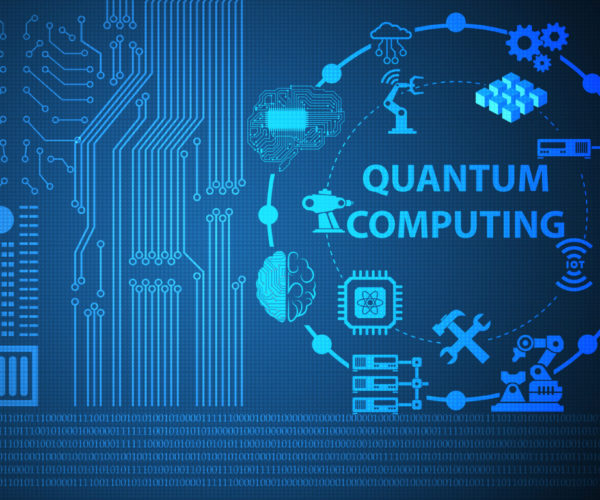
Learners will explore how quantum computing delivers groundbreaking advances in data processing, encryption, and algorithmic power—paving the way for real-time transactions, secure financial infrastructures, and decentralized value distribution. Designed for both curious minds and professionals, this series brings the future of finance to life in an accessible, captivating format.
More Information about Quantum Computing:
Quantum computing is an exciting and rapidly developing field that harnesses the principles of quantum mechanics to perform computations. Unlike classical computers that use bits to represent information as either a 0 or a 1, quantum computers use qubits (quantum bits).
Here’s a breakdown of what makes quantum computing unique:
- Qubits: The fundamental building blocks of quantum computers. Unlike classical bits, qubits can exist in a superposition of states, meaning they can be 0, 1, or both simultaneously. This allows quantum computers to process a vast amount of information at once, leading to inherent parallelism.
- Superposition: Imagine a coin spinning in the air. Before it lands, it’s in a superposition of both heads and tails. Similarly, a qubit can be in a combination of 0 and 1 until it’s measured. This allows quantum computers to explore multiple possibilities simultaneously.
- Entanglement: This is a peculiar quantum phenomenon where two or more qubits become linked in such a way that the state of one instantly influences the state of the others, no matter how far apart they are. This correlation allows quantum computers to perform complex calculations much more efficiently.
- Quantum Gates: Similar to logic gates in classical computers, quantum gates manipulate qubits and their quantum states (superposition and entanglement) to perform computations
How it works (in simplified terms):
- Initialization: Qubits are prepared in a specific initial quantum state.
- Manipulation: Quantum gates are applied to the qubits to perform operations. These operations leverage superposition and entanglement to explore many possible solutions simultaneously.
- Measurement: When the computation is complete, the qubits are measured. This process collapses their superposition into a definite classical state (0 or 1), providing the answer to the problem. Due to the probabilistic nature of quantum mechanics, results might need to be run multiple times to confirm the most probable outcome.
Key differences from classical computers:
- Information Unit: Classical computers use bits (0 or 1); quantum computers use qubits (0, 1, or both simultaneously).
- Processing Power: Quantum computers can potentially solve certain complex problems exponentially faster than classical computers due to superposition and entanglement, which allow for parallel processing of many possibilities.
- Operating Conditions: Quantum computers are extremely sensitive to their environment and often require super-cooled, vacuum-sealed conditions to maintain the delicate quantum states of their qubits.
What is quantum computing good for?
While not a replacement for everyday computers, quantum computers excel at specific types of problems that are practically impossible for even the most powerful supercomputers today. Some potential applications include:
- Drug Discovery and Material Science: Simulating molecular interactions at a quantum level can revolutionize drug development, allowing for the design of new drugs and materials with desired properties.
- Cryptography and Cybersecurity: Quantum computers could potentially break current encryption methods, leading to the development of “quantum-resistant” cryptography and new secure communication methods like Quantum Key Distribution (QKD).
- Artificial Intelligence and Machine Learning: Processing massive datasets and optimizing complex algorithms could significantly advance AI, leading to more powerful machine learning models.
- Financial Modeling: Better risk assessment, portfolio optimization, and fraud detection in the financial industry.
- Optimization Problems: Solving complex optimization challenges in logistics, supply chains, traffic management, and manufacturing.
- Climate Modeling: More accurate simulations for weather forecasting and understanding climate change.
Quantum computing is still in its early stages of development, but it holds immense promise for solving some of the world’s most challenging problems across various industries.